
SEAMEO RIHED Partners with SEAMEO RETRAC to Connect Global Expertise and Regional Perspectives on AI in Higher Education
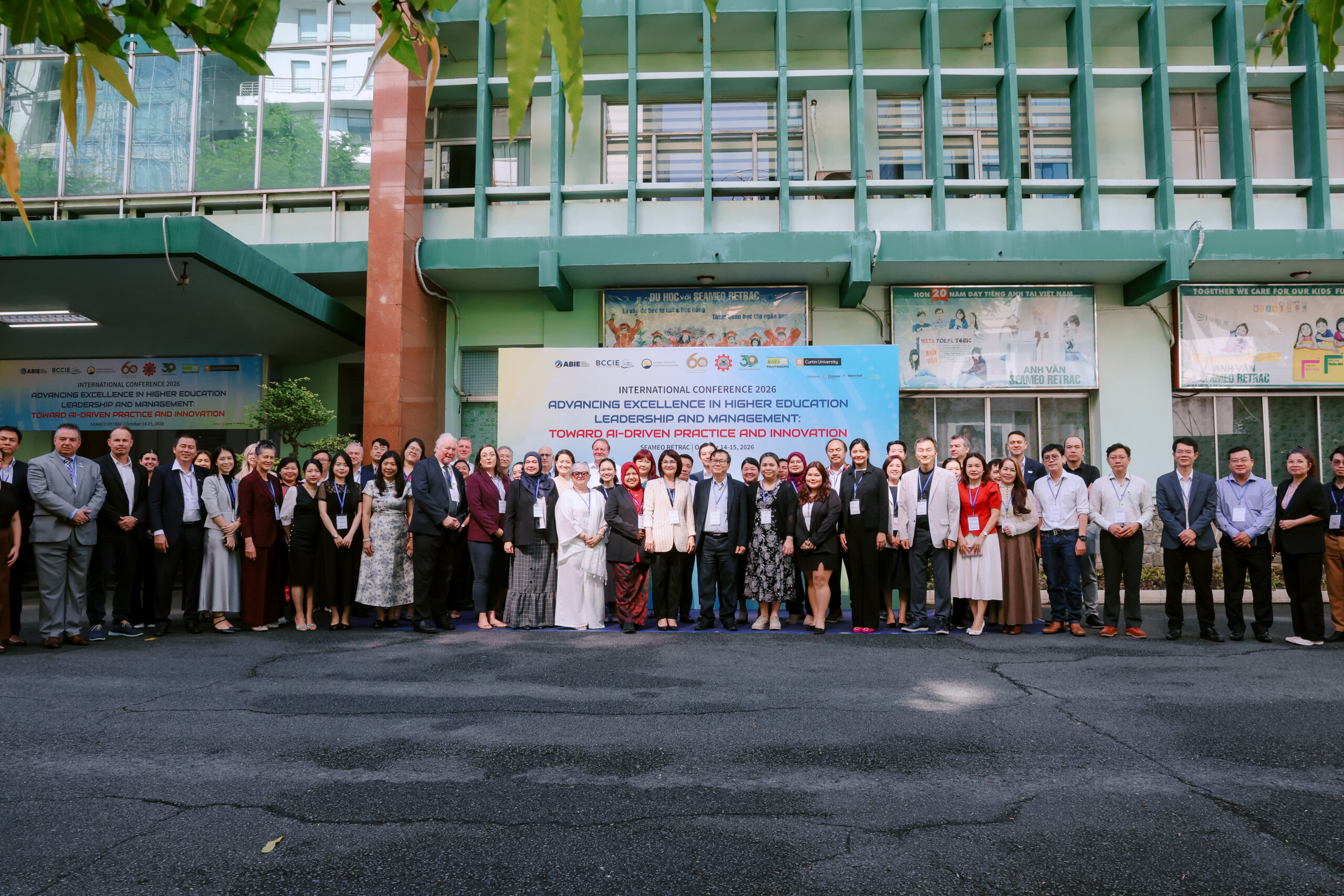
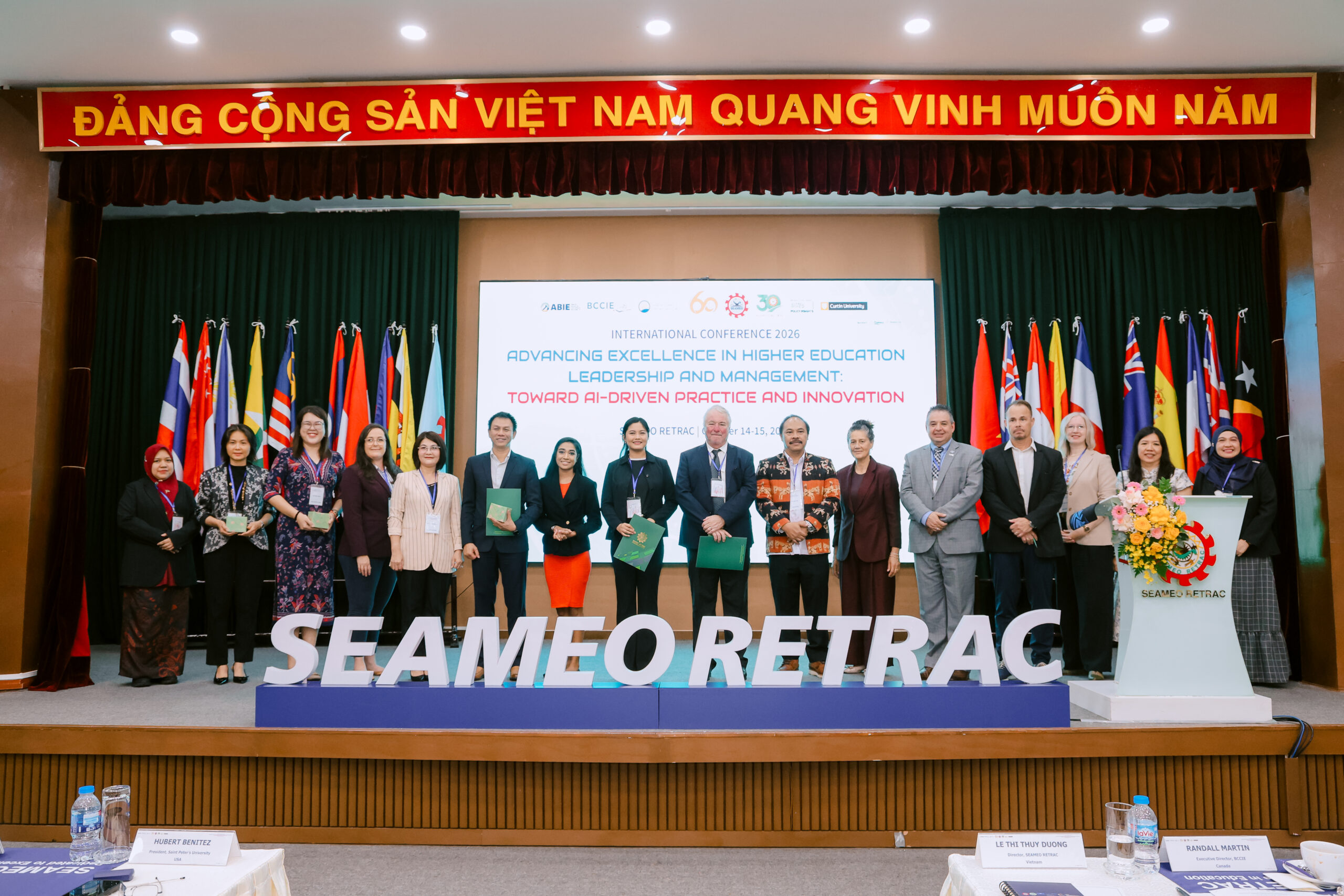
On 14–15 October 2026, SEAMEO RIHED collaborated with SEAMEO RETRAC and international partners in organising the International Conference on “Advancing Excellence in Higher Education Leadership and Management: Toward AI-Driven Practice and Innovation” at SEAMEO RETRAC in Ho Chi Minh City, Vietnam.
The two-day conference brought together diverse participants from 14 countries, including higher education leaders, researchers and practitioners, to exchange perspectives and practical experiences on the opportunities and challenges of artificial intelligence in higher education. Collaborating organisations included the Alberta Bureau for International Education (ABIE), the British Columbia Council for International Education (BCCIE), the Canadian Bureau for International Education (CBIE), Curtin University and SEAMEO RIHED.
Exploring AI in leadership and institutional practice
Through keynote addresses, presentations and discussions, the conference examined how AI is influencing educational policy, institutional administration, quality assurance and research. Contributions explored approaches to responsible AI adoption, the use of institutional data to support decision-making, and the importance of maintaining human oversight and accountability.
The discussions considered how universities can respond to technological change while remaining guided by their educational missions. Institutional experiences highlighted the need for clear policies, practical guidance and appropriate support for those implementing AI in their work.
Supporting learning and critical thinking
Teaching, learning and assessment formed another major focus of the programme. Presentations explored AI-supported experiential learning, simulations, personalised feedback and approaches to curriculum design.
Several sessions examined how universities can assess students’ understanding when AI tools can generate written work and other outputs. Examples included reflective activities, oral explanations and assessment approaches that make students’ reasoning and learning processes more visible. Discussions also considered how AI could support inquiry while preserving independent thinking and professional judgement.
Faculty readiness featured throughout the programme, with attention to the knowledge, confidence and continuing support academic staff need to use AI responsibly.
Considering ethics and inclusion
The conference also provided space to examine the ethical and social implications of AI. Contributions addressed human agency, gender and other forms of bias, accessibility, and the representation of diverse knowledge and experiences.
These discussions highlighted the importance of considering who benefits from AI adoption, whose perspectives are represented, and how institutional practices can support equitable participation. They complemented the practical sessions by encouraging participants to examine AI integration in relation to educational quality and inclusion.
Connecting regional and international perspectives
The conference offered opportunities to share research, compare institutional experiences and strengthen connections among higher education partners in Southeast Asia and beyond. For SEAMEO RIHED, the exchange was relevant to its work in leadership development, regional cooperation and inclusive higher education.