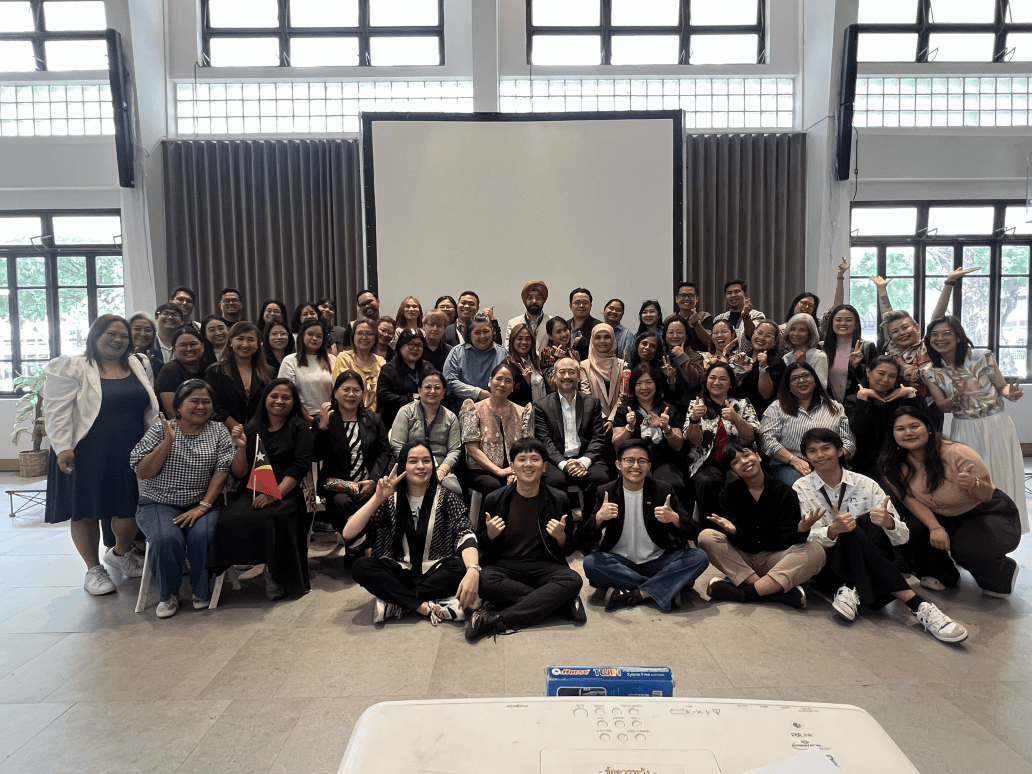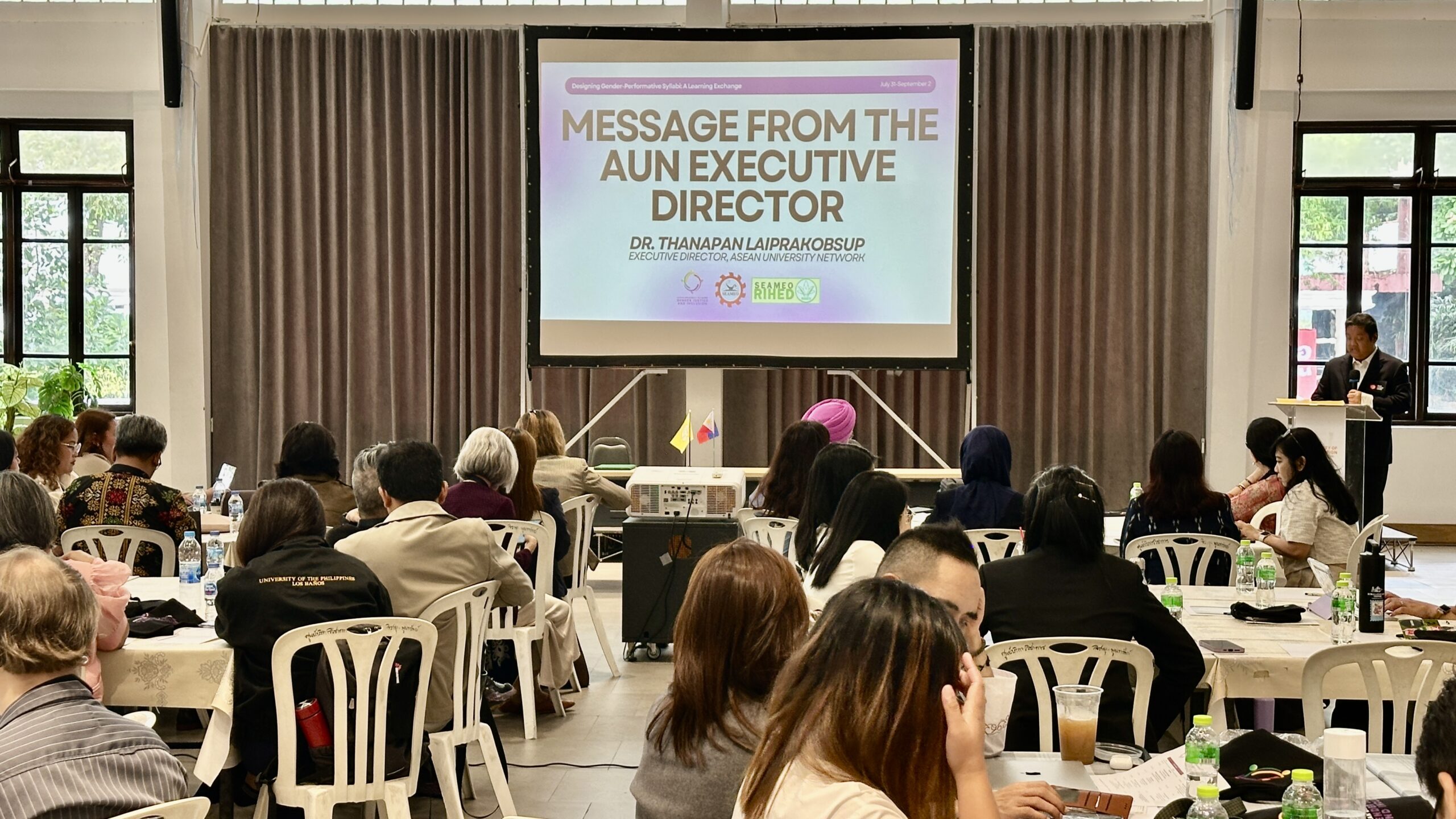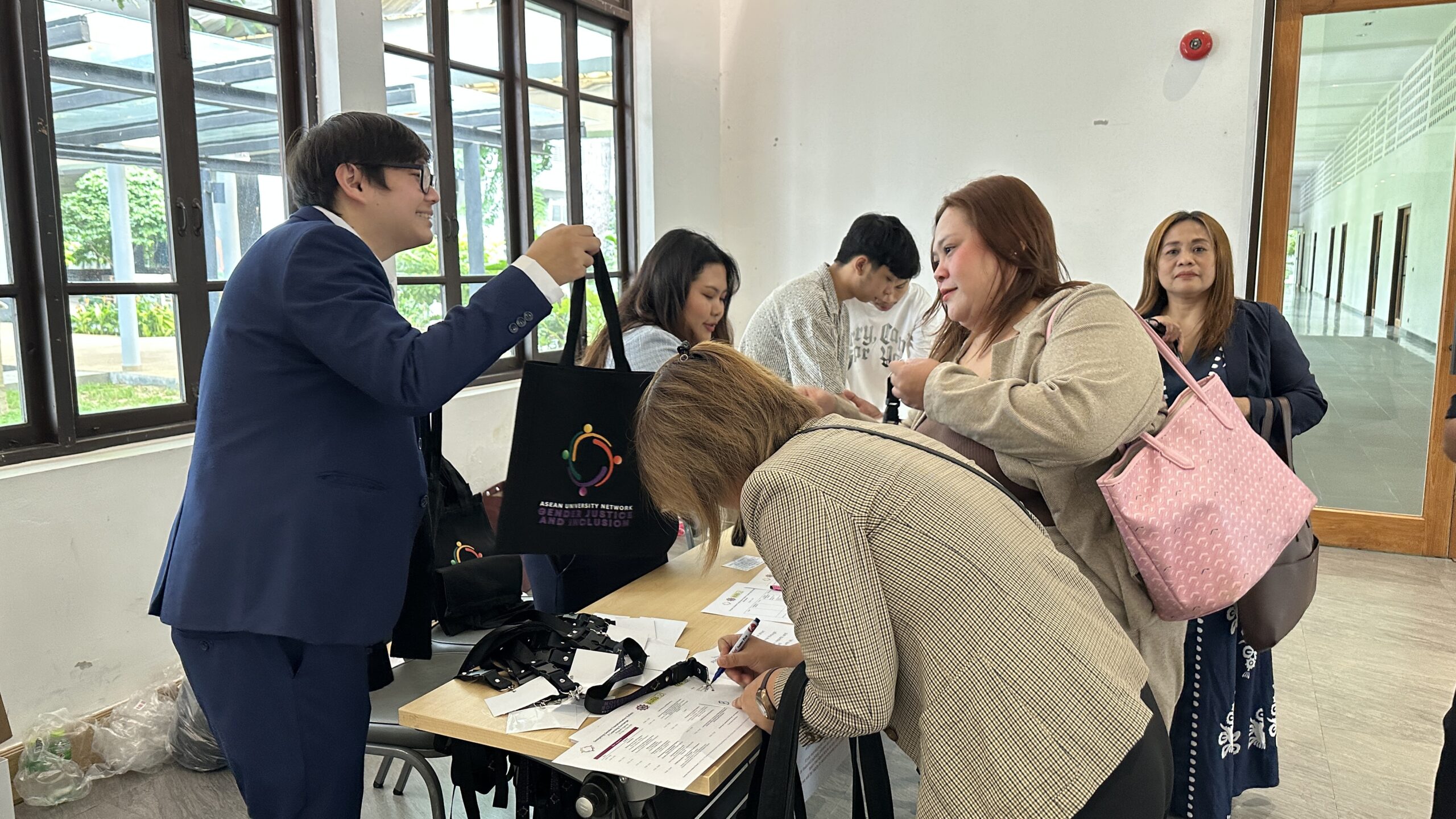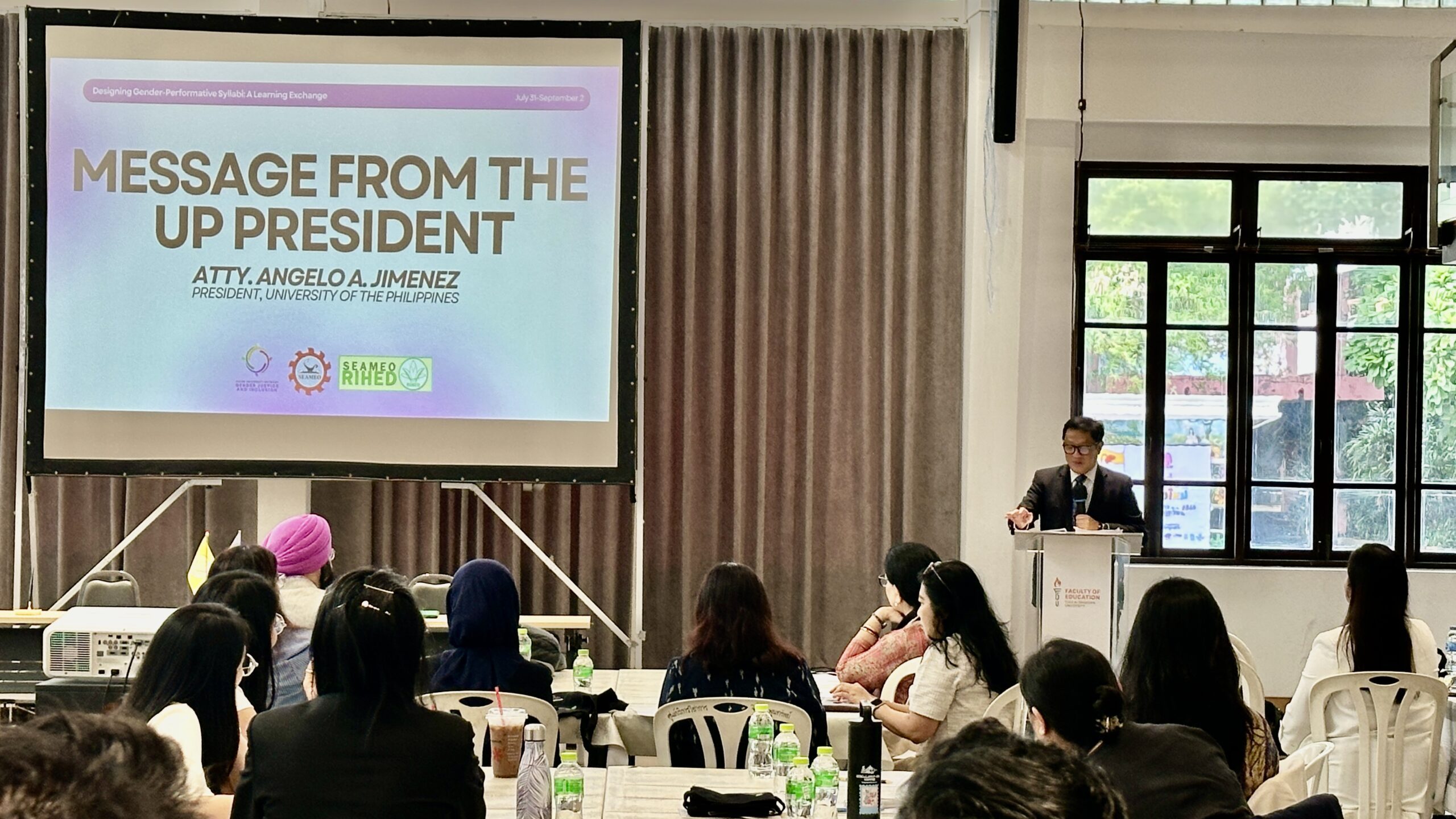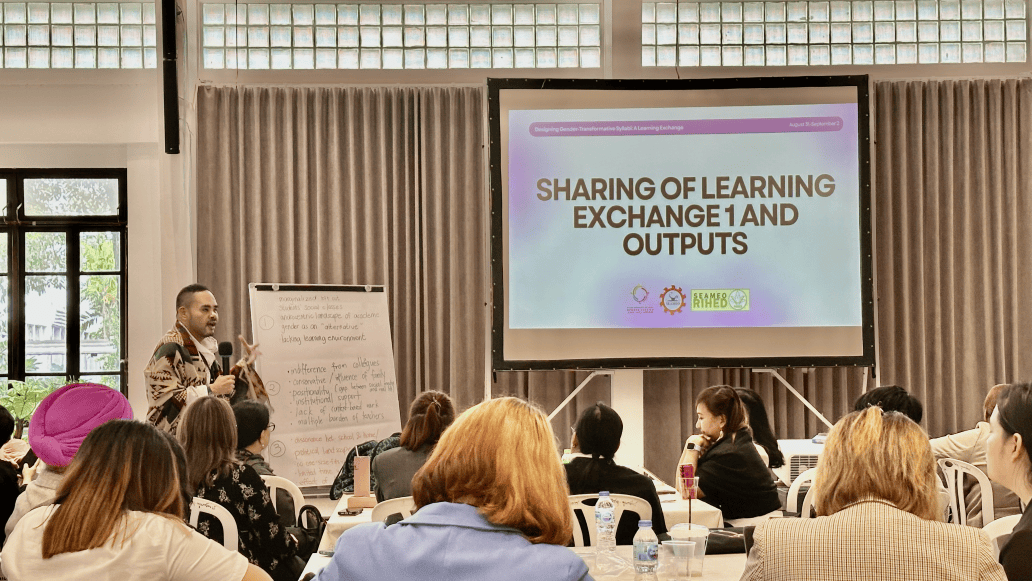

From 31 August to 2 September 2026, the ASEAN University Network on Gender Justice and Inclusion (AUN-GJI), in partnership with SEAMEO RIHED, organised “Designing Gender-Transformative Syllabi: A Learning Exchange Program” at the Faculty of Education, Chulalongkorn University in Bangkok, Thailand.
The three-day programme brought together more than 60 university leaders, educators, researchers and curriculum practitioners to exchange experiences and explore practical approaches to embedding gender justice and inclusion in higher education curricula. Building on the Forum on Gender Transformative Curriculum held in December 2025, the programme aimed to move the regional conversation from dialogue towards practical application.
The opening programme included messages from Atty. Angelo A. Jimenez, President of the University of the Philippines; Dr. Thanapan Laiprakobsup, Executive Director of the ASEAN University Network; Dr. Ma. Theresa T. Payongayong, Convenor of AUN-GJI; and Dr. Choltis Dhirathiti, Centre Director of SEAMEO RIHED.
A key moment of the programme was the signing of a Memorandum of Understanding between SEAMEO RIHED and the University of the Philippines through AUN-GJI. The agreement reflects the institutions’ shared commitment to strengthening regional cooperation and advancing gender justice and inclusion in higher education.
Learning across disciplines
The programme featured contributions from experts working across education, STEM, social sciences and gender studies:
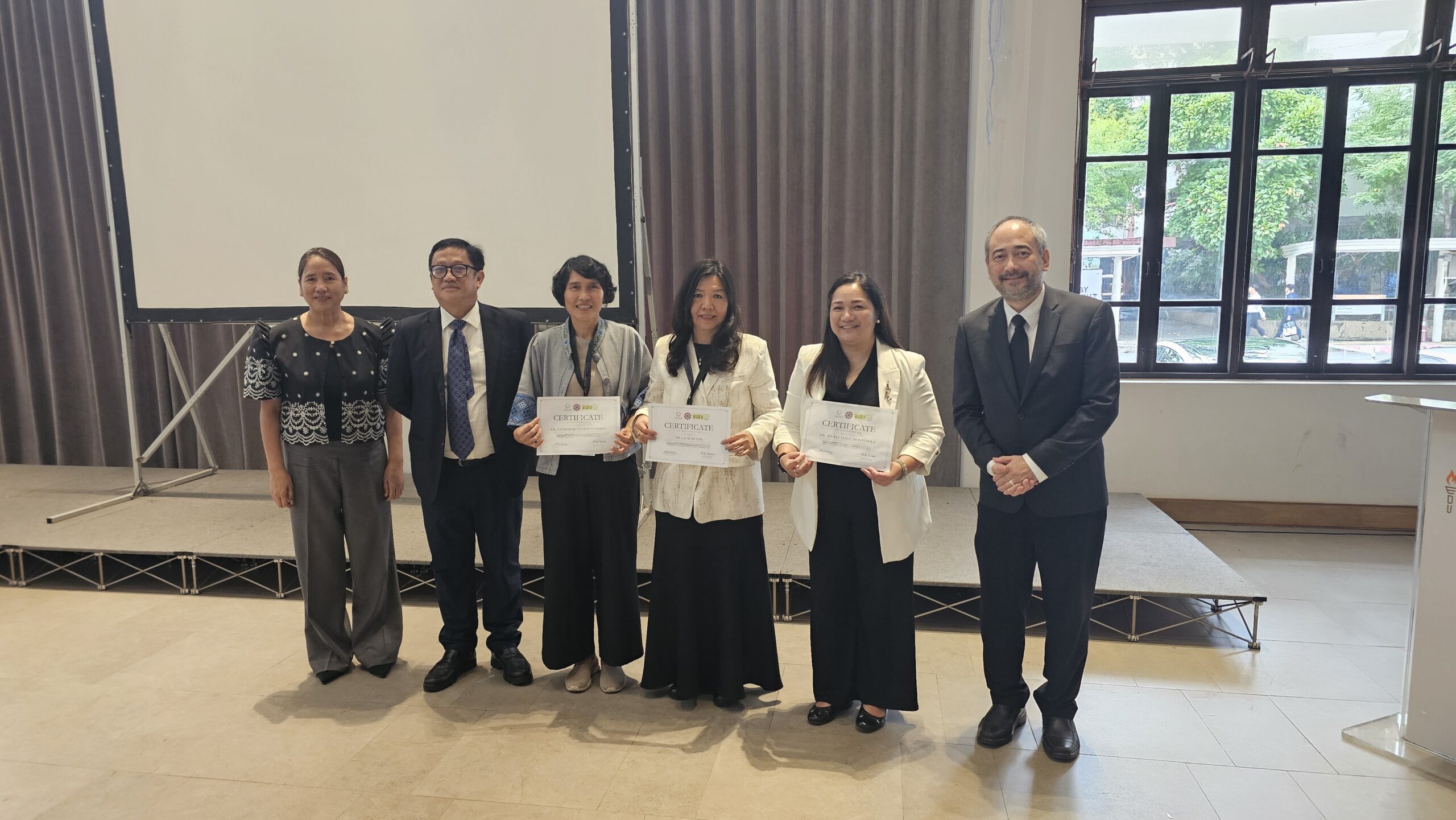
- Dr. Sheryl Lyn C. Monterola, Director of the National Institute for Science and Mathematics Education Development at the University of the Philippines Diliman, shared approaches to inclusive STEM education, teacher development and culturally responsive pedagogy.
- Dr. Vachararutai Boontinand, Lecturer at the Institute of Human Rights and Peace Studies, Mahidol University, and Convenor of the ASEAN University Network Human Rights Education Network, explored the integration of gender perspectives into social science education.
- Dr. Lai Suat Yan, Coordinator and Senior Lecturer of the Master of Gender Studies Programme at Universiti Malaya, examined gender-transformative approaches through the lenses of intersectionality, feminist pedagogy, positionality and inclusive assessment.
The discussions highlighted that a gender-transformative syllabus extends beyond adding gender-related topics to course content. It requires educators and institutions to examine whose knowledge and experiences are represented, how classroom participation and assessment are structured, and whether existing practices address or reinforce inequalities.
Moving from discussion to practice
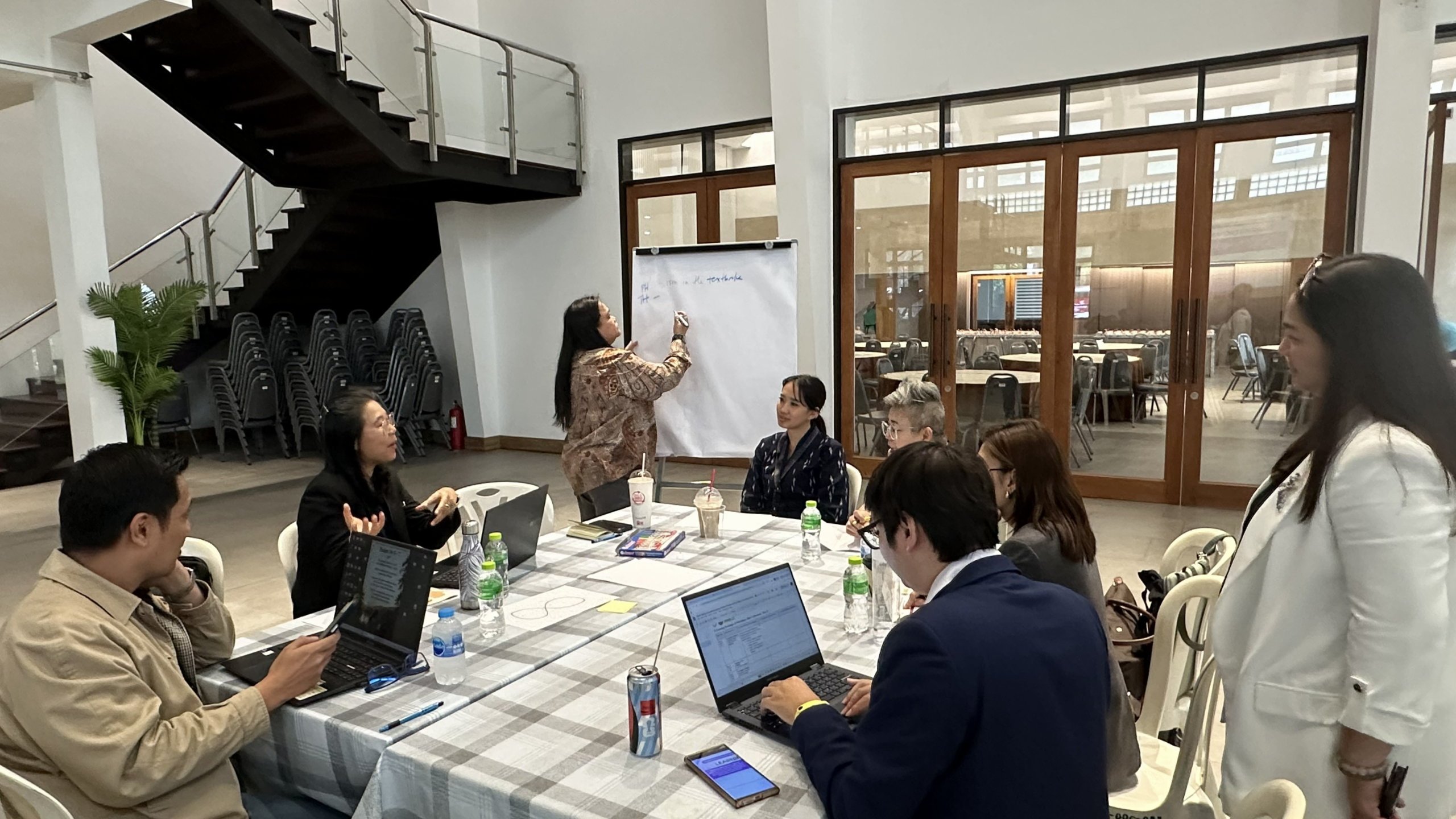
Participants took part in a series of collaborative learning exchanges focused on three interconnected areas. First, they mapped current gender justice issues and barriers affecting teaching and curriculum development. These included limited institutional support, gender-biased learning materials, cultural resistance, insufficient training and resources, and challenges in translating policies into practice.
Participants then explored pedagogical and assessment approaches that could create safer and more inclusive learning environments. Discussions covered respectful and gender-sensitive language, diverse learning materials, representation of Southeast Asian and Global South perspectives, intersectionality, universal design for learning, collaborative learning and alternative forms of assessment.
The final learning exchange focused on translating these insights into practical action. Working together, participants developed sample approaches to gender-transformative syllabi and considered action plans and implementation strategies that could be adapted within their respective disciplines and institutions.
The programme emphasised that institutional support is essential for sustained curriculum transformation. Participants highlighted the importance of faculty development, supportive policies, appropriate resources, safe learning environments and collaboration among educators, institutional leaders and students.
Strengthening a regional community of practice
In his closing remarks, Dr. Choltis Dhirathiti emphasised the importance of moving promising ideas and pilot initiatives towards wider institutional adoption. The learning exchange contributed to this ambition by connecting educators and experts who can continue sharing knowledge and supporting gender-transformative curriculum development across the region.
The programme represents an important step towards building a regional community of practice committed to advancing gender justice in higher education. The participating educators, researchers and practitioners may also serve as a valuable network for future collaboration, knowledge exchange and regional initiatives related to Gender Equity, Diversity and Inclusivity.
SEAMEO RIHED extends its sincere appreciation to AUN-GJI, the University of the Philippines, all resource persons and participants, and everyone who contributed to the successful implementation of the programme.